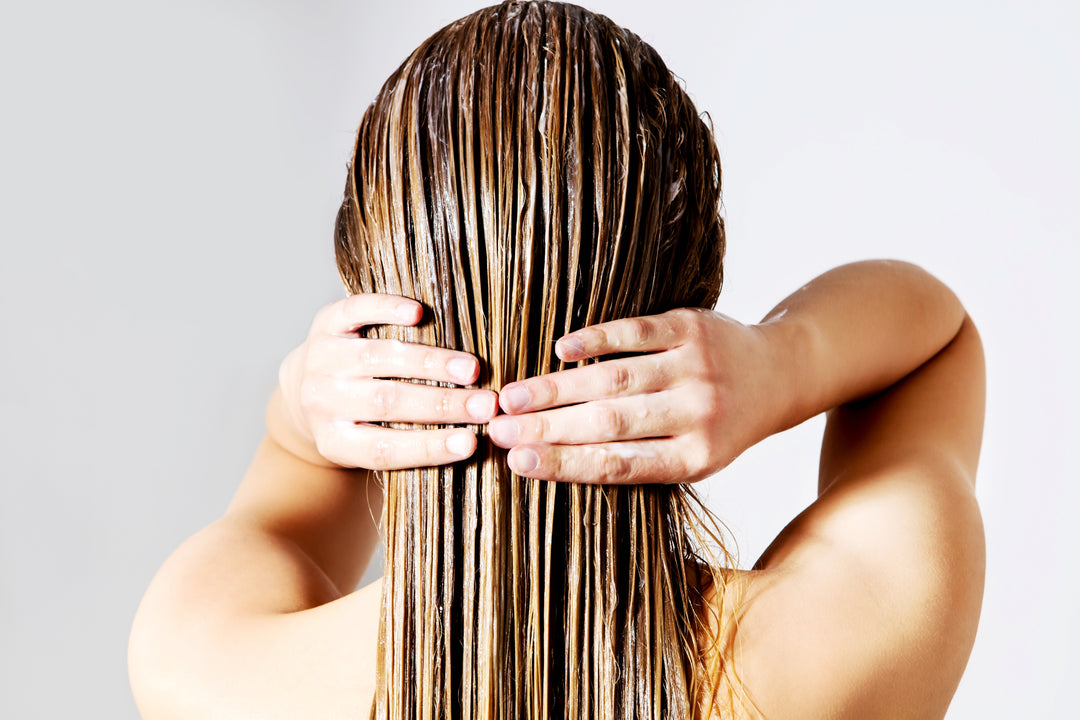
Hair looks oily because the scalp makes its own oil, sebum, and that oil travels down the hair from the root. How much you make is largely yours to live with, so the aim is not to stop it but to manage it well. A routine that does that is simple: wash as often as your scalp asks, shampoo the scalp rather than the lengths, keep conditioner away from the roots, use a clarifying shampoo now and then, and let dry shampoo carry you between washes. Below is each step, and the shampoos, conditioners and dry shampoos we would choose for it.
Why Does Hair Get Oily?
Sebum is made by small glands beside each hair follicle. It has a purpose: it gives the hair a little softness and shine. The trouble is only one of distribution. Once it builds up at the root, roots look flat, strands begin to cling together and the hair looks heavier than it is.
How quickly that happens differs from one person to the next. Fine, straight hair shows oil soonest, because there is less of each strand to hold it and nothing to slow its path down the hair. Heat and humidity, the change of seasons and the years all play a part. So do everyday habits: running your hands through your hair, a fringe resting on the forehead, rich products used too close to the scalp.
How Often Should You Wash Oily Hair?
There is no single right number. If your roots feel oily by the following day, washing daily or every other day is perfectly reasonable, provided the shampoo is one made for frequent use and the wash itself is gentle. What matters more than the count is the way you wash: lukewarm water rather than hot, a light massage with the fingertips rather than the nails, and a thorough rinse.
Shampoo the Scalp, Not the Lengths
Oil sits at the root, so that is where the shampoo belongs. Work a small amount into wet hair at the scalp, section by section, and massage gently. When you rinse, the lather running through the lengths is enough to clean them. Two light washes often do more than one heavy one: the first lifts the oil, the second cleans.
A shampoo made for oily hair keeps the job light. Klorane's Oil Control Nettle Shampoo is formulated for oily hair and frequent washing, with nettle root extract. Phyto's Sarcosine + Rosemary Oil-Reducing Shampoo pairs its two named ingredients in a formula for oily scalp and hair. Wella Professionals' Scalp Balance Shampoo, with lotus extract, is a deep-cleansing wash made for oily scalps. Ducray's Argeal Sebum-Absorbing Shampoo takes a different approach: it contains kaolin, a fine clay valued for absorbing oil, in a creamy texture that suits a slow scalp massage.
- Oil Control Nettle Shampoo
- Sarcosine + Rosemary Oil-Reducing Shampoo
- Scalp Balance Shampoo
- Argeal Sebum-Absorbing Shampoo
Conditioner on the Lengths Only
Oily roots are no reason to skip conditioner. The lengths and ends are older than the hair at the root and usually drier, and they still need detangling. The rule is placement: smooth conditioner from the mid-lengths to the ends, leave it briefly, and rinse it out completely. A lightweight formula keeps the finish airy.
John Frieda's Volume Lift Lightweight Conditioner is made for fine or flat hair, the type that shows oil first, and the house asks for it to be worked from mid-lengths to ends. Katai's Vegan Therapy Lime & Lemon Conditioner is designed for dull, frizzy and oily hair, with lime and lemon extracts. Ogx's Purifying + Charcoal Detox Conditioner includes charcoal powder and kaolin, and is applied the same way, through the lengths and ends only.
- Volume Lift Lightweight Conditioner
- Vegan Therapy Lime & Lemon Conditioner
- Purifying + Charcoal Detox Conditioner
A Clarifying Shampoo, Now and Then
Over a week or two, styling products, dry shampoo and the minerals in hard water can leave a film that ordinary shampoo does not quite lift. Hair feels coated and flat, and oil seems to return sooner. A clarifying shampoo is a deeper cleanse for exactly that. It is an occasional step, not a daily one: once a week or once a fortnight is a sensible place to begin, adjusted to how much product you use. Follow it with conditioner on the lengths.
Olaplex's N°.4C Bond Maintenance Clarifying Shampoo is a deep clarifying cleanse for all hair types. Tigi's Down 'N Dirty Clarifying Detox Shampoo is designed to lift away build-up, the house suggests especially after styling products or a busy week, and includes glycerin and lotus extract. For a pre-wash step, Wella Professionals' Purifying Pre-Shampoo Clay is applied to the scalp before shampooing, with kaolin, and is made for oily scalps.
- N°.4C Bond Maintenance Clarifying Shampoo
- Down 'N Dirty Clarifying Detox Shampoo
- Purifying Pre-Shampoo Clay
Dry Shampoo Between Washes
Dry shampoo does not wash the hair. Its powders and starches absorb oil at the root, so roots look fresher and lift returns. That makes it the bridge between washes rather than a replacement for them. Used well, it is quick: shake the can, part the hair into sections and spray at the roots from the distance the pack gives, leave it a moment, then massage in and brush through. It works best on roots that are only beginning to look oily. On the next wash day, shampoo thoroughly so nothing is left at the scalp.
Klorane's Dry Shampoo with Nettle is made for oily hair, with rice starch and nettle root extract, and a beige tint so it does not leave white residue. Bumble and bumble's Prêt-à-Powder Très Invisible Nourishing Dry Shampoo refreshes the roots and, sprayed lightly through the lengths, helps care for dry or damaged ends, with hibiscus extract. Kevin Murphy's Fresh.Hair Dry Shampoo is a lightweight spray with orange and tangerine peel oils. Collistar's Attivi Puri Hair Niacinamide Dry Shampoo pairs niacinamide with rice starch for a cleaner-looking root.
- Dry Shampoo with Nettle
- Prêt-à-Powder Très Invisible Nourishing Dry Shampoo
- Fresh.Hair Dry Shampoo
- Attivi Puri Hair Niacinamide Dry Shampoo
Brushes, Hands and Heat
- Keep your hands out of your hair. Every touch moves oil from the scalp onto the strands.
- Brush with intent. A few strokes to detangle, starting at the ends, rather than constant brushing from the root, which draws oil down the lengths.
- Clean your hairbrush every week or so. Oil and product collect in the bristles and go straight back onto clean hair.
- Keep oils, serums and rich creams to the ends, well away from the scalp.
- Wash in lukewarm water, and dry the roots first on a moderate heat setting, keeping the dryer moving.
- Change your pillowcase often.
The Routine at a Glance
- Wash when your scalp asks for it, daily if you need to, with a shampoo for oily hair.
- Shampoo the scalp in sections, massage with the fingertips, and let the rinse clean the lengths.
- Conditioner from mid-lengths to ends only, then rinse completely.
- A clarifying shampoo once a week or fortnight, or a pre-shampoo clay on the scalp.
- Dry shampoo at the roots between washes.
When to Ask for Advice
Oily roots on their own are usually a matter of routine. If your scalp is itchy, flaking or sore, ask a pharmacist or doctor before changing products. Introduce one change at a time, so you can see what your hair responds to.
If you change only one thing this week, make it where the shampoo goes: on the scalp, worked in gently, with the lengths left to the rinse.