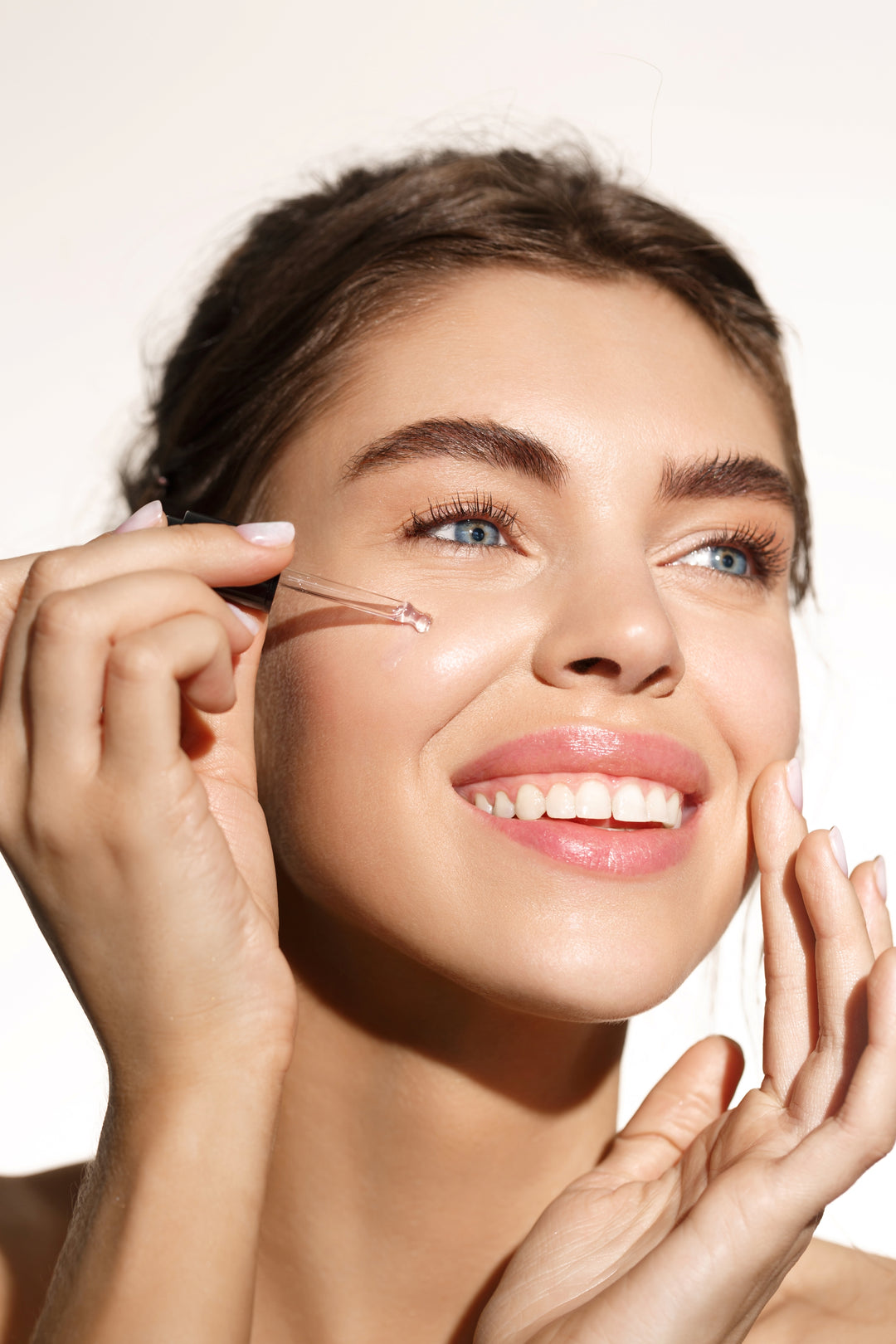
A day cream is made for the hours your skin is on show: lighter, quick to settle, comfortable under make-up and, very often, carrying an SPF. A night cream is made for the hours it is not: usually richer, free to feel more cushioned, and the natural home for ingredients such as retinol and exfoliating acids that are best kept away from daylight. Both are moisturisers. What changes is texture, protection and timing.
What Makes a Day Cream Different?
A day cream has three jobs. It keeps skin feeling comfortable and hydrated until evening, it sits smoothly under foundation or tinted moisturiser without pilling or sliding, and, in many formulas, it adds a layer of sun protection. That is why day creams tend towards light lotions, gel-creams and fluid textures that sink in within a minute or two.
If your day cream lists an SPF, it is doing the work of two products in one step. For an ordinary day in town that can be enough, applied generously to the face and neck. If you will be outdoors for long, or your cream carries a low SPF, finish with a dedicated broad-spectrum sunscreen as well. If your day cream has no SPF at all, sunscreen is always the step that follows it.
Day Creams with SPF
Clarins Multi-Active Jour SPF 15 Day Cream is a light, silky cream with niacinamide and an SPF 15 finish, applied each morning to the face and neck. Shiseido Essential Energy Hydrating Day Cream SPF 20 is a lightweight cream with hyaluronic acid, made as the final skincare step before make-up. Olay Regenerist Day Cream SPF 30 pairs niacinamide and a peptide with SPF 30 in a light, fast-absorbing texture for all skin types. Topicrem Hydra+ Protective Day Cream SPF 50 is made for sensitive skin, with a moisturising postbiotic complex in a light, non-greasy cream that layers beneath make-up or is worn on its own.
- Multi-Active Jour SPF 15 Day Cream
- Essential Energy Hydrating Day Cream SPF 20
- Regenerist Day Cream SPF 30
- Hydra+ Protective Day Cream SPF 50
What Makes a Night Cream Different?
At night there is no make-up to wear over your cream and no sun to protect against, so a night cream can do things a day cream cannot. It can be richer: balms, cushioned creams and textures with butters and oils that would feel heavy under foundation are comfortable on a pillow. It can be slower to absorb, because nothing needs to go on top. And it carries no SPF, because sun filters do nothing for you in the dark.
A richer night cream suits skin that feels dry or tight by evening, and it is often the first change worth making when the weather turns cold. If your skin is oily or you dislike a heavy feel, a lighter night cream or gel-cream gives you the evening step without the weight.
Night Creams for Comfort
Estée Lauder Resilience Multi-Effect Night Tri-Peptide Face and Neck Creme is a cushiony cream with a tri-peptide complex, made for the face and neck; it can also be used as an overnight treatment or a weekly mask. Laboratoires Filorga Sleep & Lift Night Cream is a rich texture with soluble collagen, sodium hyaluronate and the house's NCTF complex of amino acids and vitamins. Decleor Mandarine Verte Night Balm is a balm of botanical waxes and mandarin essential oil: warm a little between your fingertips before smoothing it over the face and neck. For something lighter, Neutrogena Hydro Boost Night Cream is a lightweight, cushiony cream built on glycerin and sodium hyaluronate.
- Resilience Multi-Effect Night Tri-Peptide Face and Neck Creme
- Sleep & Lift Night Cream
- Mandarine Verte Night Balm Face Moisturiser
- Hydro Boost Night Cream
Night Creams with Active Ingredients
Some night creams carry ingredients that are better used in the evening. Retinol is the best known: it is kept for night-time because daylight breaks it down, and it can leave skin more sensitive to the sun. Exfoliating acids such as glycolic acid smooth the skin's surface and also call for sunscreen the next morning. Vitamin C is often worn by day, but some houses build it into a night cream too.
Vichy Liftactiv B3 Tone Correcting Night Cream combines retinol with niacinamide, and is made to be followed by a broad-spectrum sunscreen the next morning. Payot Lisse Sleeping Resurfacing Cream is a velvet-textured sleeping cream with glycolic acid and hyaluronic acid. Strivectin Super-C Night Vitamin C Night Cream is a vitamin C night cream with a cushioned texture, applied as the last step of the evening, away from the eye area.
- Liftactiv B3 Tone Correcting Night Cream
- Lisse Sleeping Resurfacing Cream
- Super-C Night Vitamin C Night Cream
Introduce one of these at a time. Patch test first, start with two or three evenings a week, and keep them away from the eyes. Wear sunscreen every morning while you use them, and do not layer a retinol cream with an acid serum on the same night. If you are pregnant or breastfeeding, ask your pharmacist or doctor before using retinol. We explain both families in more depth in Retinol: How to Start, How Often, and What to Pair It With, and in AHA and BHA: Exfoliating Acids Explained.
Do You Need Both?
Not necessarily. One good moisturiser, used morning and evening, with sunscreen on top by day, is a complete routine. Many face creams are made for day and night use, and if your skin feels comfortable on that, there is no reason to change.
Two creams earn their place when your skin wants different things at different times: a light, protective texture under make-up in the morning, and something richer, or a cream with retinol or acids, at night. They also make sense if your day cream carries an SPF, since there is no point wearing sun filters to bed. If you would rather keep one cream, choose one without SPF for both, and add a separate sunscreen each morning.
What About the Eye Area?
The skin around the eyes is thinner and more delicate than the rest of the face, and many face creams, especially those with retinol or acids, ask you to keep them away from it. An eye cream is made for that area, usually used in a smaller amount and with a finer texture. Take a small dab, tap it in with your ring finger along the bone around the eye, and keep it clear of the lash line.
Darphin Hydraskin All-Day Eye Refresh Gel-Cream is a cooling gel-cream for morning and evening that also works as a smooth base for make-up. Olay Retinol24 Night Eye Cream is a night eye cream with retinol and niacinamide, used in small amounts after cleansing. L'Oréal Paris Midnight Eye Cream is a rich, fast-absorbing evening eye cream with shea butter, squalane and caffeine.
How to Use Them
- Morning: cleanse, toner if you use one, serum, eye cream, day cream, then sunscreen if your cream has no SPF or you will be outdoors for long.
- Evening: remove make-up, cleanse, toner, serum, eye cream, night cream.
- Smooth each cream over the face and neck with gentle upward strokes, on clean skin.
If you are choosing just one change, start at night. Swap your evening moisturiser for a night cream suited to your skin, keep your day cream for the morning, and give it a few weeks before deciding whether the second cream earns its place.